Notes · getting paid
Case file: the invoice that never came back
What to do when an invoice is 60 or more days late: a final notice that works, your options if it doesn't, and when to close the file.
Updated 2026-10-27
The reminders went out. The client read them, or didn't. Now the invoice is 60 days past due and you are starting to think of it as a case file: a date, an amount, and a trail that goes cold. This note is about what to do from here, step by step, from a final notice to small claims to deciding when to let it go.
If the invoice is newer than about three weeks overdue, start with the polite schedule in how to follow up on an unpaid invoice (day 3, day 10, day 21). Everything below assumes you have already done that, and you have also tried a phone call or a message on another channel.
Step 1: check your own file first
Before you escalate, make sure the problem isn't on your side. Invoices can get stuck for boring reasons. Check that:
- The invoice went to the person who actually pays, not only to your day-to-day contact.
- It has the details their accounts team needs: your business name, invoice number, due date, and any purchase order number they gave you.
- Nothing on it is in dispute. If the client raised a question about one line, answer it. An unanswered question is a reason not to pay the whole thing.
- You have the paper trail together: the agreement or emails that set the price, the approved hours or delivered work, the invoice, and every reminder and reply.
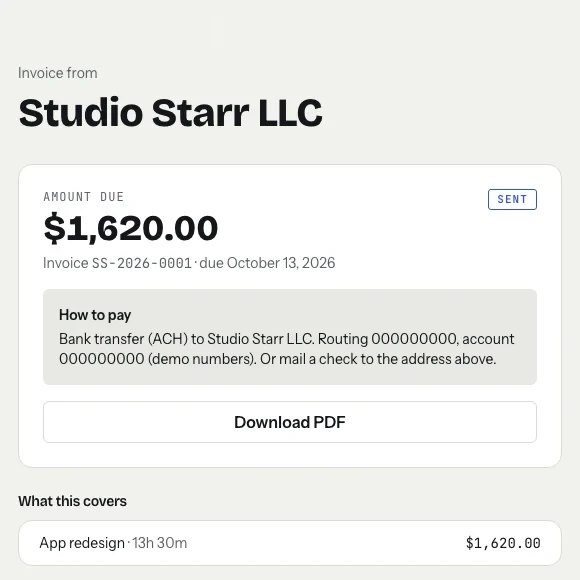
That record is your evidence if this goes further, so keep it in one folder before you send anything else.
Step 2: send a final notice
A final notice (sometimes called a demand letter) is a short, formal message that says three things: what is owed, by when it must be paid, and what you will do if it isn't. It is the last friendly-but-firm step, and often the one that works, because it is the first one with a consequence and a date.
A few rules for this message:
- Only name a step you will actually take. An empty threat teaches the client to wait you out.
- Send it in writing to the person who pays and your contact, and keep a copy. Some freelancers also send it by certified mail so there is proof it arrived.
- Stay factual. No anger, no comments about the client's character. If a judge or agency ever reads it, it should make you look like the reasonable one.
- Offer a way out. If cash is the problem, a written payment plan (for example, three payments over three months) beats a lawsuit for both of you.
Step 3: know your options if the deadline passes
Small claims court
Small claims courts are built for disputes the size of a freelance invoice, and you usually don't need a lawyer. Limits and rules are set by each state, and businesses can have different limits from individuals. For example, in California you can generally sue for up to $12,500, or up to $6,250 if you are a business, and you can't bring a lawyer into the courtroom with you (California Courts Self-Help Guide). Look up your own state's court website before you file, and check which court to use, since it often depends on where the client is.
Freelance payment laws
Some places have laws written for this situation. Under New York City's Freelance Isn't Free Act, a freelancer who isn't paid on time can collect double the unpaid amount, plus attorneys' fees and costs (NYC Department of Consumer and Worker Protection). New York State and Illinois have similar protections, summarized with their official sources in the follow-up note. Each official page says where to file a complaint, which can be a cheaper first step than court.
A collection agency
An agency takes over the chasing for you. Before you sign, ask exactly how they are paid, what happens if they collect nothing, and how they will contact your client, and get it in writing. Once a debt goes to collections, the working relationship with that client is usually over, so this is a step for clients you are ready to lose.
Checked October 26, 2026. This is general information, not legal advice. For large amounts, talk to a lawyer where you or your client are based.
Step 4: decide when to let it go
Sometimes the honest answer is that chasing costs more than the invoice: in time, in filing fees, in worry. It is fine to decide that. Put a date on the decision, close the file, and stop doing any more work for that client.
One tax point that surprises many new freelancers: in the US, writing off an unpaid invoice usually doesn't give you a deduction. The IRS says that if you are a cash method taxpayer, as most individuals are, you generally can't take a bad debt deduction for unpaid fees and similar income, and business bad debts can only be deducted if the amount was included in your income (IRS Topic 453, Bad debt deduction). In plain terms: if you never counted the money as income because it never arrived, there is nothing to deduct. The loss is already reflected in your lower income. This is general information, not tax advice; ask a tax professional about your own situation.
Checked October 26, 2026.
Making the next invoice harder to ignore
You can't control every client, but you can make late payment less likely and less costly:
- Ask for a deposit on new clients and bigger projects, and bill large jobs in milestones rather than one invoice at the end. In tab, a fixed-price project can be split into milestones that are billed one at a time.
- Invoice often. A small invoice every week or two is easier to pay, and you find out early if a client is slow.
- Make paying easy. A real due date and a pay link. tab invoices can be paid online by bank transfer or card, and the payment fee calculator shows what each method costs you.
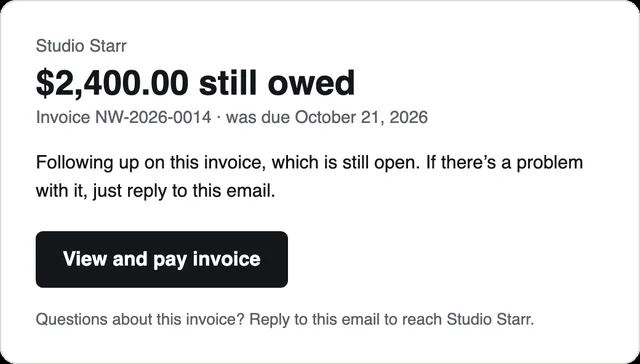
- Turn on reminders for slow payers. tab's overdue reminders are off until you switch them on for a client. Then tab emails the client from you at 3, 10 and 21 days past due, with the pay link, three at most. After that, the next step is yours.
tab's Money page keeps one number in front of you: how much is overdue and on how many invoices, so a quiet client doesn't slip out of sight. Need an invoice with a clear due date right now? The free invoice generator makes one in a minute.
Keep reading



Questions
What do I do when an invoice is 60 days overdue?
Check that the invoice reached the person who pays and isn't disputed, then send a final notice with the amount, a payment deadline 10 to 14 days out, and the step you'll take next. After that, your options are a payment plan, a freelance-law complaint where one exists, small claims court, or a collection agency.
What should a final notice for an unpaid invoice say?
The invoice number, amount and original due date, the reminders already sent, a firm deadline to pay, a pay link, and the specific action you will take if it isn't paid. Keep it factual and only name a step you will really take.
Can I sue a client in small claims court for an unpaid invoice?
Usually yes, if the amount is under your state's limit. Limits and rules differ by state, and businesses can have lower limits than individuals. Check your state court's website before filing.
Can I deduct an unpaid invoice on my taxes?
Usually not if you use the cash method, as most individuals do. The IRS says cash method taxpayers generally can't take a bad debt deduction for unpaid fees, because that income was never reported. Ask a tax professional about your situation.
Keep the next invoice out of the case files.
tab turns your hours into an invoice with a due date and a pay link, sends the polite reminders for you, and shows what's overdue at a glance. Free to start, no account to try it.
Start free Try it, no sign-upFree to startNo cardNo screenshots, ever