Notes · starting out
Getting your name out as a new freelancer
No single trick, just a few ordinary channels used steadily: who to tell first, where to show up, and what to say.
Updated 2026-10-27
Nobody hires a freelancer they have never heard of. When you are new, the work before the work is simply letting people know you exist, what you do, and that you are taking on clients. There is no single trick for it. What works is a few ordinary channels, used steadily, starting with the people closest to you.
This note goes through those channels in the order most new freelancers should try them, with a short message you can adapt for each.
Start with one clear sentence
Before you tell anyone, decide what you are telling them. One sentence: who you help, with what. "I design websites for small restaurants." "I do bookkeeping for therapists in private practice." "I write product documentation for software teams." A specific sentence is easier to remember and easier to pass on. "I do a bit of everything" gives nobody a reason to think of you.
1. Your former employers and colleagues
The people who have already seen you work are the strongest first channel. A former manager knows your quality; a former colleague may now be at a company that needs exactly what you do. Some employers hire former staff as contractors, especially for work they know you did well. Check any agreement you signed when you left before you approach clients from that job.
2. Your own network, told once and clearly
Friends, family, old classmates, people from clubs and past jobs. Most of them won't need you. Some will know someone who does. Tell them once, directly, with your one sentence, rather than hinting. A personal message to twenty people usually does more than a general post to five hundred, because each one can answer you.
On LinkedIn, a Service Page lists what you offer on your profile. LinkedIn says Service Pages are free to create, and some extra features need a paid subscription (LinkedIn Help, Create a LinkedIn Service Page).
3. Communities where your clients already gather
Think about where the people who buy your work spend time: an industry association, a local business group, a Slack or Discord community for founders, a forum for the software they use. Join a few, and be useful there: answer questions, share what you know, and say what you do in your profile. Hard selling in a community usually gets ignored or removed. Being the helpful person who knows the subject is what gets the direct message later.
Communities of other freelancers are worth joining too. They are not your clients, but they get offered work they can't take and pass it on to someone they trust.
4. Local businesses
If your work can be done for a business near you, walk in or call. A short, specific offer works better than a general one: "I noticed your menu isn't on your website; I can fix that this week." Keep a simple one-page summary or link ready to leave behind.
If you meet clients in person or travel to them, you may be able to list yourself on Google. Google's guidelines say a business can create a Business Profile if it has a location customers visit or travels to customers where they are (Google Business Profile guidelines). A freelancer who only works online usually doesn't qualify, so check the guidelines before you set one up.
5. A portfolio, even a small one
Every channel above ends with someone asking "can I see your work?" Have an answer ready: three to five examples that match the work you want more of, each with a sentence on the problem and what you did. If you don't have client work yet, a well-made project of your own counts, as long as you say it is one. Ask permission before showing client work, and leave out anything confidential.
6. Freelance marketplaces
Marketplaces bring clients who are already looking to hire, which helps when your network is small. The trade-off is price competition and fees. On Upwork, for example, the freelancer service fee ranges from 0% to 15% per contract, and you see the fee before you send a proposal (Upwork Help, Freelancer Service Fees). The Upwork fee calculator shows what is left of a rate after the fee. Clients you meet on a marketplace generally stay on that marketplace under its terms, so read them before moving a relationship elsewhere.
Checked October 26, 2026.
Layers, not a launch
This note's picture is a wall of torn street posters: layer over layer, each one pasted up, partly covered, and still showing through. Getting known as a freelancer looks like that. No single post or message does it. Each one adds a layer, and over a few months people start to recognise the name.
A simple weekly rhythm is enough: a few personal messages to people you know, one useful contribution in a community, and one small update to your portfolio. Keep a list of who you contacted and when, so you can follow up in a month without guessing.
When the first yes comes
Be ready before it happens. Know your rate (the hourly rate calculator and the rate guides help), and know how you will track time and invoice. With a few small clients at once, a separate meter for each keeps the hours from blurring together.
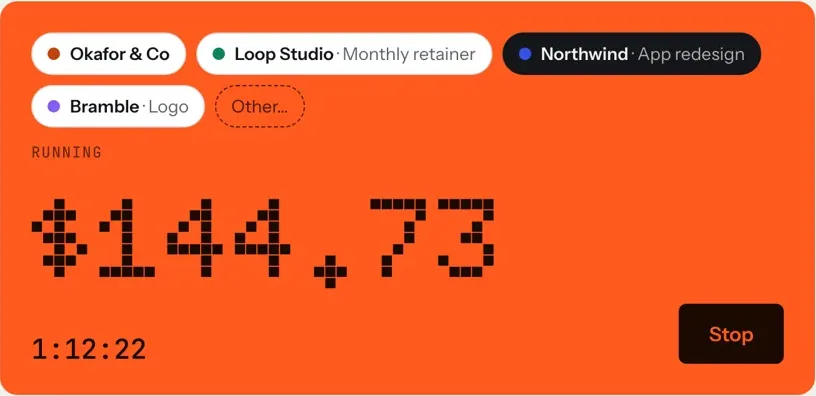
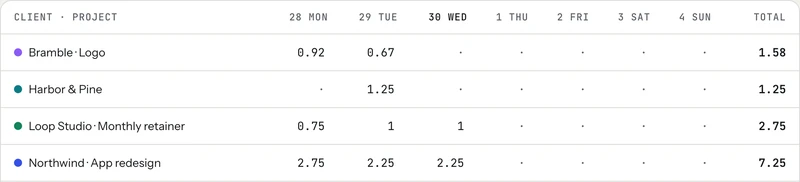
See how that works on the four clients page. You can try tab right now with no account, and when the first client becomes a project, there is a checklist for what to set up before you start.
Keep reading
 Start here57 free notes, sorted by what you need this week: first client, pricing, late payments, taxes.
 Open enrollment, self-employedThe 2027 dates, estimating an uneven income, and pricing health insurance into your rate.
 Side hustle to full-timeFour numbers to check before you quit: real rate, monthly costs, runway, and client risk.
Questions
How do I get my first freelance clients with no experience?
Start with people who already know your work: former employers, colleagues and your own network. Tell them in one clear sentence what you do and who you help, and have a small portfolio ready, even if it includes your own projects labelled as such.
Where do freelancers find clients?
Through people they already know, referrals, communities where their clients gather, local businesses, a portfolio site and freelance marketplaces. Using a few of these steadily works better than one big push.
Are freelance marketplaces worth it for beginners?
They can help when your network is small, because clients there are already looking to hire. The trade-offs are price competition and fees; on Upwork the freelancer fee ranges from 0% to 15% per contract.
Should I post on social media to find freelance clients?
It can help, but a personal message to someone you know usually gets a reply where a general post doesn't. Use posts to show your work, and direct messages to ask.
Ready when the first yes comes.
tab tracks your hours per client and turns them into an invoice your client pays online. Free to start, no account to try it.
Start free Try it, no sign-upFree to startNo cardNo screenshots, ever