Notes · getting paid
Net 15, net 30 or due on receipt: picking your payment terms
What the common terms mean, how to choose them, and how to write them so the due date is never a question.
Updated 2026-10-27
Payment terms are the clock on your invoice. They tell the client how long they have to pay, and they decide how long you wait for money you've already earned. New freelancers often accept whatever the client suggests, or leave the terms off entirely, and then find out that "net 60" means two months of rent paid out of savings.
Here is what the common terms mean, how to choose between them, and how to put them in writing so the due date is never a question.
What the terms mean
- Due on receipt. Payment is due as soon as the client gets the invoice. In practice there's no fixed date, so it's easy to put off. Clients read it as "soon", not "today".
- Net 7, net 14, net 15. Payment is due 7, 14 or 15 days after the invoice date. Short, clear, and common for small businesses and individuals.
- Net 30. Due 30 days after the invoice date. A common choice for companies with an accounts payable team.
- Net 45, net 60 and longer. Some larger companies ask for these. Fine if you plan for it, painful if you don't.
The number is days. The count usually starts on the invoice date, so say that in your terms: "due 14 days after the invoice date" leaves nothing to interpret.
How to choose
Pick terms you can live with before the client suggests theirs. Three questions help:
- How long can you wait? Add up a month of your own bills. If you invoice monthly on net 30, money for work done at the start of the month arrives about two months later. If that gap would hurt, choose shorter terms or invoice more often. Freelance cash flow walks through planning for the gap.
- Who is the client? A small business owner can pay in a week. A large company may have a set payment run and won't change it for you. With them, ask about their terms at the start and price the wait into the job.
- How big is the invoice? For a large fixed-price project, terms matter less than structure: a deposit before you start and payment in parts keeps you from waiting on one big invoice. See retainers and deposits.
A simple default to start with: net 14 for small clients, net 30 for companies that require it, and a deposit on anything big. Shorter terms are always easier to relax later than longer ones are to shorten.
Shorter cycles beat shorter terms
If a client insists on net 30 or more, change how often you invoice instead of arguing about the number. Invoicing every two weeks on net 30 means money arrives every two weeks once it gets going, rather than in one large, late payment. For hourly work, a weekly work receipt the client approves keeps every invoice free of surprises, so it moves through their approval faster.
Put the terms in writing, twice
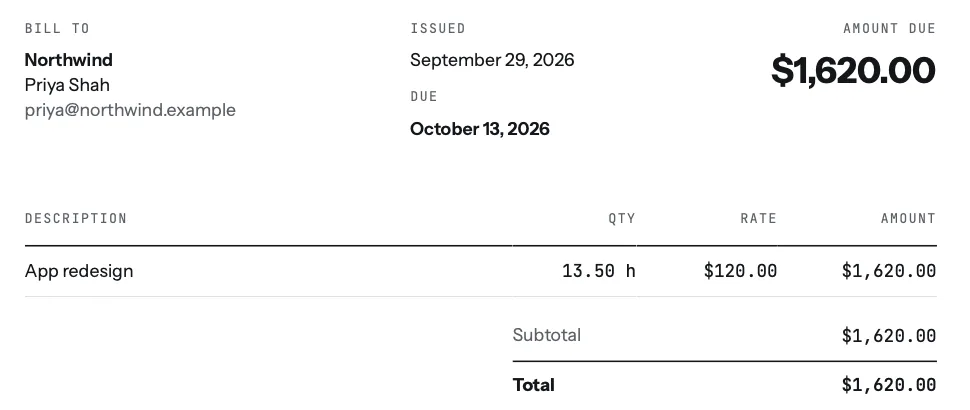
Write the terms in your contract or proposal, then put the actual due date on every invoice. A date ("Due November 17, 2026") is clearer than a term ("Net 14"), because nobody has to count.
In some places the payment date is required by law, and the law sets a default when it's missing:
- New York City. Freelance contracts worth $800 or more, including agreements that add up to $800 within 120 days, must be in writing and state the date you get paid. If the contract has no payment date, the client must pay within 30 days after you complete the work (NYC Department of Consumer and Worker Protection).
- Illinois. For contracts taking effect after July 1, 2024 and work worth $500 or more in a 120-day period, payment is due by the date in the contract, or within 30 days of completing the work if no date is specified (Illinois Department of Labor).
Checked October 26, 2026. General information, not legal advice.
The contract basics note covers the rest of what to agree before you start.
When the client asks for longer terms
A new client asks for net 60. You have options short of yes or no:
Other trades that work: a smaller first project paid on short terms, or longer terms in exchange for a slightly higher price. What matters is that the decision is yours, made before the work starts.
What happens when the date passes
A due date is only useful if something happens after it. Decide in advance: a friendly reminder a few days after, a firmer one a week later, and a pause on new work if it drags on. Following up on an unpaid invoice has the schedule and wording, and late fees covers whether to add one.
Setting payment terms in tab
Each client in tab has its own "Payment due in" setting: on receipt, 7, 14, 15, 30, 45 or 60 days, starting at 14. When you send an invoice, tab sets the due date that many days after sending and prints the date on the invoice. You can change the date on any single invoice before it goes out.
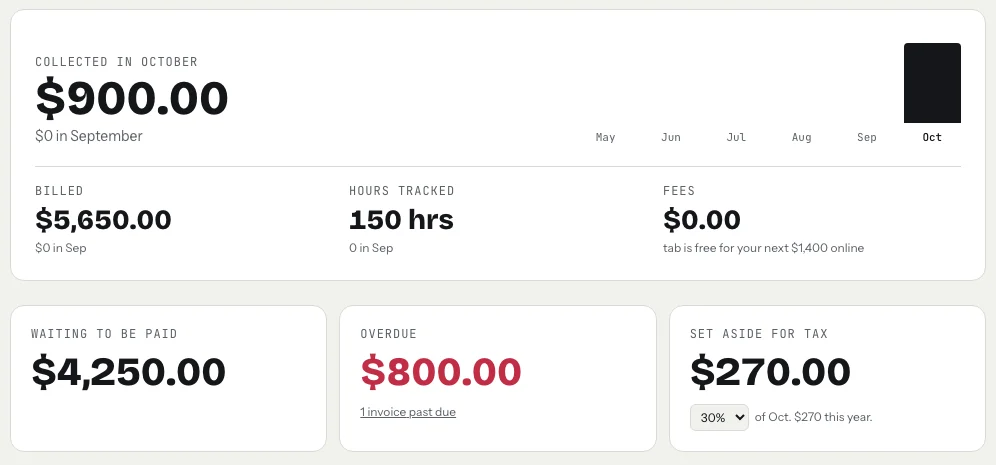
The Money screen then shows what's waiting to be paid and what's overdue, so you see a late invoice the day it slips rather than at the end of the month.
Need an invoice with a due date right now? The free invoice generator makes one in a minute, and timesheet to invoice turns your hours into the lines.
Keep reading



Questions
What does net 30 mean on an invoice?
Net 30 means the full amount is due 30 days after the invoice date. Net 15 is 15 days, net 60 is 60 days. Writing the actual due date on the invoice avoids any confusion about when the count starts.
Is net 30 or net 15 better for freelancers?
Shorter terms mean you wait less for money you've earned. Net 14 or 15 suits most small clients; net 30 is common with companies that require it. If a client needs longer terms, invoice more often or ask for a deposit.
Does 'due on receipt' mean the client has to pay immediately?
Technically yes, but it gives no fixed date, so it is easy to put off. A specific due date, such as 14 days after the invoice date, is clearer and easier to follow up on.
What if my contract doesn't say when I get paid?
In New York City and Illinois, freelance laws say the client must pay within 30 days after you finish the work when no date is set. Elsewhere it depends on local law, so always write a payment date into the agreement.
Set the terms once, per client.
tab puts the right due date on every invoice, lets the client pay online by bank or card, and shows you what's overdue. Free to start, no account to try it.
Start free Try it, no sign-upFree to startNo cardNo screenshots, ever