Notes · clients
Your best next client already paid you once
Who to write to first, when to reach out, and three short notes you can send to past clients this week.
Updated 2026-10-27
When work slows down, the instinct is to look for new clients: new profiles, new pitches, new strangers. But some of the people most likely to hire you next have already done it once. They know your work, they have your invoice details, and they already decided you were worth paying. A short, honest note to a past client is often the fastest way back to a booked week.
Most freelancers don't send that note. It feels pushy, or they assume the client would have called if they needed anything. But a client who hasn't thought about you in a while has no way of knowing you have room unless you say so. Here is when to reach out, who to start with, and the words to use.
Who to write to first
Not every past client is worth the same note. Sort your list before you write anything:
- Paid on time, at a good rate. These go first. If a client paid every invoice without chasing and the job paid your rate, more of the same is good business.
- Quiet for a month or more. Under a month, they probably still have you in mind. Past a month, a reminder starts to help.
- Not cold yet. After a year and a half or so, a "check-in" reads more like a cold pitch. It can still work, but write it as a fresh introduction, not a catch-up.
- Skip the ones you don't want back. Late payers, endless revisions, rates you have since outgrown. Leaving them off the list is a decision too.
To sort this you need two numbers per client: when you last worked together, and what the work really paid per hour. If you track time per client, both are already in your records. For fixed-price jobs, the real rate view divides the fee by the hours it took, which is often a surprise.
When to reach out
- When you have room. The honest reason is the best one: "I have some time opening up next month."
- At natural moments in their year. The start of a quarter, before a busy season for their business, the anniversary of a launch you worked on.
- When you have something new. A new skill or service that fits what they do. Only mention it if it genuinely helps them.
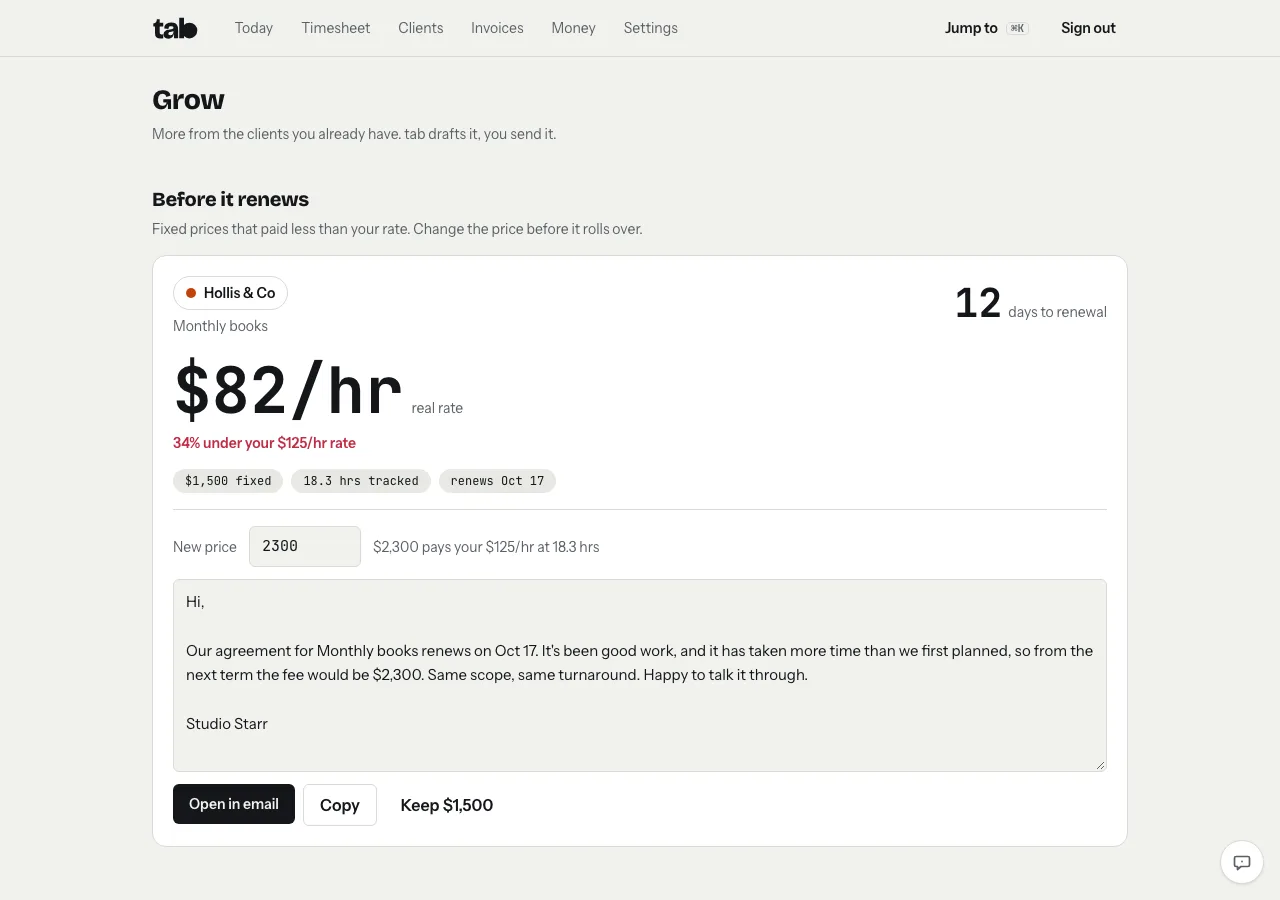
- Before a fixed-price arrangement renews. If a monthly or yearly flat fee has been taking longer than planned, the weeks before renewal are the time to adjust the price, not after it rolls over.
Once is enough. One note, and if there's no reply, one gentle follow-up a couple of weeks later. Then leave it for a few months.
What to say: three short notes
Keep it to a few lines. No long update on your life, no list of services, no discount. The aim is to make replying easy.
Notice what each one does: it names the shared history, gives one reason for writing now, and ends with an easy next step. The first one is the exact check-in draft tab writes for you; the renewal note is tab's renewal draft. Edit both so they sound like you.
Let tab notice who's gone quiet
Remembering who you haven't heard from is the hard part, not the writing. In tab, the Grow screen does the remembering from data you are already keeping: clients who paid you and haven't had any work or invoices for 30 days or more, best first, with how reliably they paid and your real rate with them. It also flags fixed-price work that ran under your rate and renews within 30 days, with a suggested price.
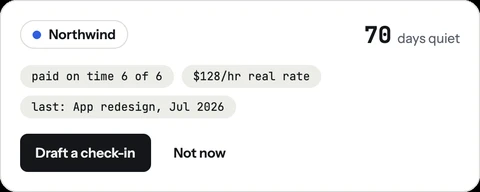
tab drafts the note, and you send it. It never emails your clients from Grow: you open the draft in your own email or copy it, so the note comes from you. Sending it takes that client off the list for two months; "Not now" hides them for 30 days. The full feature is on the past clients page.
Start the clock, no accountSign up free
One email or a hundred?
A personal note to one past client is a normal business conversation. A bulk email to your whole client list, announcing a new service, is different: in the US it is a commercial message under the CAN-SPAM Act. The Federal Trade Commission says the law "makes no exception for business-to-business email", and it gives a message to former customers announcing a new product line as an example. For commercial email the rules include an honest subject line, your valid physical postal address, a clear way to opt out, and honoring opt-outs within 10 business days. Source: FTC, CAN-SPAM Act: A Compliance Guide for Business. This is general information, not legal advice.
Checked October 26, 2026.
The simpler path for most freelancers is the one in this note anyway: a handful of personal emails, written one at a time, to people you actually worked with.
Leave a sign that lasts
This note's picture is a ghost sign: an old painted advert on a brick wall, faded but still readable long after the shop changed hands. Good client work does the same thing. Make it easy to come back: finish each job with a clear final invoice, a short summary of what was done, and one line saying you would be glad to help again. When the next project comes up, your name is still on the wall.
And when they do come back, start on the right foot. Price the new job with the hourly rate calculator or your profession's rate guide, track the time from the first minute (the homepage meter runs with no account), and if they go quiet on the invoice, there is a follow-up schedule for that too.
Keep reading
 Freelance contract basicsThe six things to settle in writing before you start, and where the law requires it.
 Weekly client updatesWhat to send every Friday so the invoice is just the total of things the client already saw.
 Saying no to clientsFour kinds of no (later, smaller, at my rate, not me) and the words for each.
Questions
How do I ask a past client for more work?
Send a short, personal email: name the project you did together, give one honest reason for writing now (for example, you have time opening up), and end with an easy next step. Skip the discount and the list of services.
How long should I wait before reaching out to a past client?
About a month after the last project or invoice is a good point to start. Clients who haven't heard from you in a year and a half or more need a fresh introduction rather than a catch-up.
Is it pushy to follow up with old clients?
Not if the note is short and specific. One email, and one gentle follow-up a couple of weeks later if there's no reply, is normal business. Then leave it for a few months.
Does tab email my past clients for me?
No. tab's Grow screen shows who has gone quiet and drafts a check-in, but you open it in your own email or copy it. Nothing is sent by tab.
More work from people who already pay you.
Track your clients in tab and it keeps an eye on who's worth a word, then drafts the note for you to send. Free to start, no account to try it.
Start free Try it, no sign-upFree to startNo cardNo screenshots, ever