Notes · clients
How to say no to a client, and keep the client
Four kinds of no, the words to use for each, and how to check what a yes would really cost before you answer.
Updated 2026-10-27
When you're new to freelancing, every request feels like one you can't afford to turn down. So you say yes to the rush job, the extra round, the call at 8pm and the discount, and a few weeks later you're tired, behind, and doing your best client's work at half your usual care.
Saying no is a normal part of running a business, and done well it often makes a client trust you more. A clear "not like that, but here's what I can do" shows you know your limits and protect the work you've already promised. This note covers when to say no, the kinds of no, and wording you can adapt.
Check before you answer
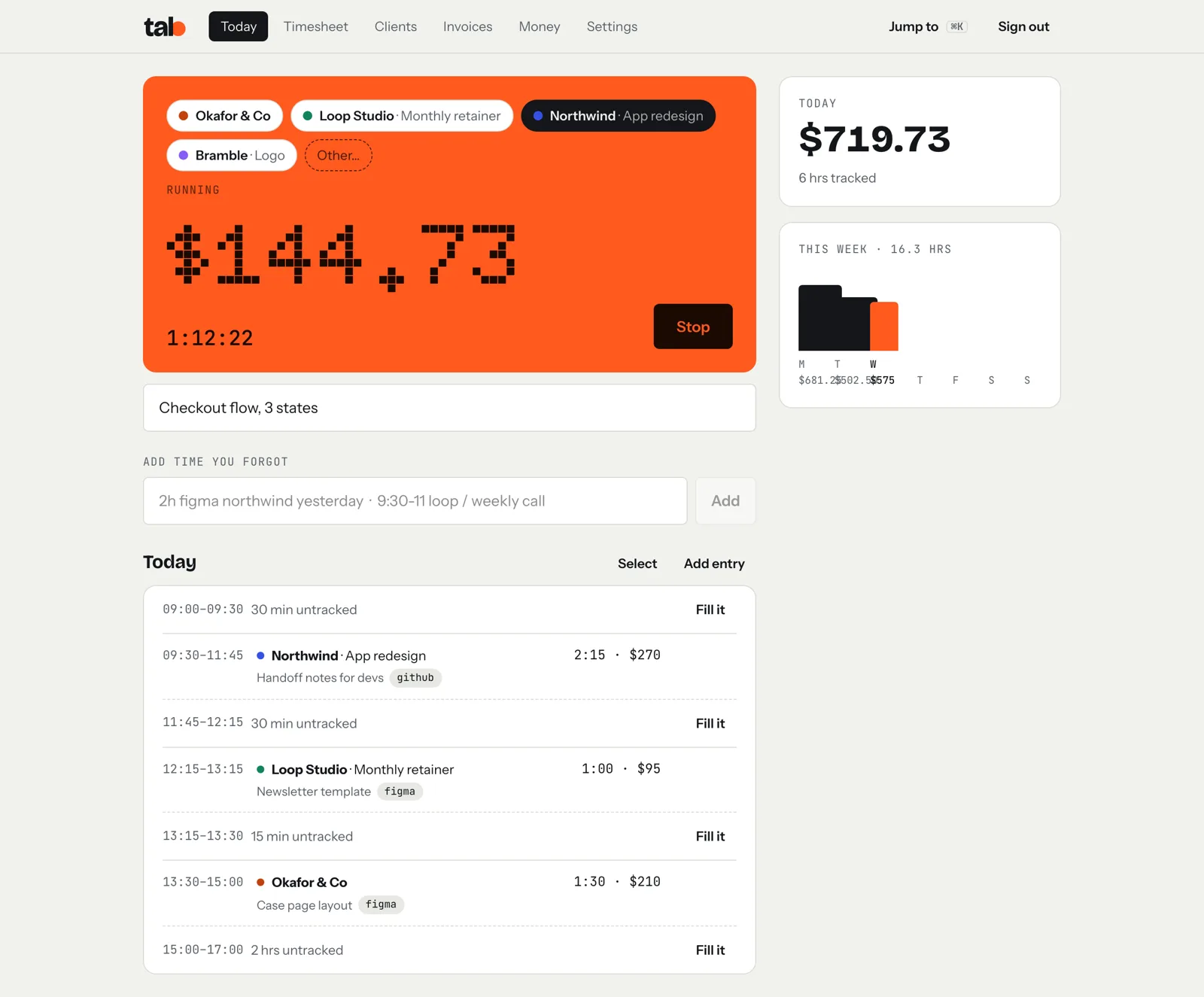
Most bad yeses happen because we answer too fast. Before you reply to a request, give yourself a moment and look at three things:
- Your week. How many hours are already promised? If your current clients fill your working hours, a new yes comes out of evenings, weekends or someone else's deadline.
- Your price. Does this work pay your rate? Extra rounds on a fixed fee, discounts and rush jobs at normal pay all lower your real hourly rate.
- Your fit. Is this work you do well? Saying yes to something outside your skills can cost you the client when it goes badly.
It's fine to reply "Let me check my schedule and get back to you by tomorrow." That's not a stall; it's how careful people answer.
The four kinds of no
A flat "no" is rarely the only option. Most of the time you're saying no to one part of a request, and you can offer something in its place.
1. No to the timeline: "Yes, but later"
The work is fine; the date isn't. Offer the next date you can honestly hit.
If they really need it sooner, you can offer a rush price for the extra hours (charging a rush fee has the details).
2. No to the scope: "Yes, a smaller version"
The budget or the time covers part of what they asked for. Say which part.
If the request is an extra on a job already in progress, treat it as a change, not a favor. It started as one small change covers the wording.
3. No to the price: "Yes, at my rate"
A client asks for a discount. Instead of lowering your rate, trade scope or terms.
Negotiating your rate has more moves for this moment.
4. No to the whole thing: "Not me, but here's who"
Sometimes the right answer is no to the project entirely: it's outside your skills, the budget can't work, or you simply don't have room. A referral turns a no into a favor.
Saying no to after-hours requests
Messages at night and on weekends are a very common pressure point. You don't have to announce a rule every time. Just reply during your working hours, every time, and the pattern teaches itself. If you haven't shared your hours yet, freelance working hours shows how to do it once, in writing.
What not to do
- Don't over-explain. One honest reason is enough. A long story invites a debate.
- Don't invent an excuse. "I'm traveling" is easy to say and hard to keep up. "I'm booked" is true and complete.
- Don't go quiet. Silence is the worst no. A short reply within a day or two keeps the door open.
- Don't say yes and resent it. If you agree, agree fully, and put the terms in writing.
Keep it in writing
Whatever you agree, whether a later date, a smaller scope or a different price, confirm it in a short email. It takes a minute and saves a lot of "I thought you said" later. Freelance contract basics lists the things worth writing down at the start of any job.
Know your numbers so no gets easier
It's much easier to say no when you can see what a yes would cost. In tab, Today shows what you've tracked today and this week, and the timesheet shows every client's hours side by side. On fixed-price work, tab shows what the job really paid per hour against your rate, so you can see which "small favors" are adding up.
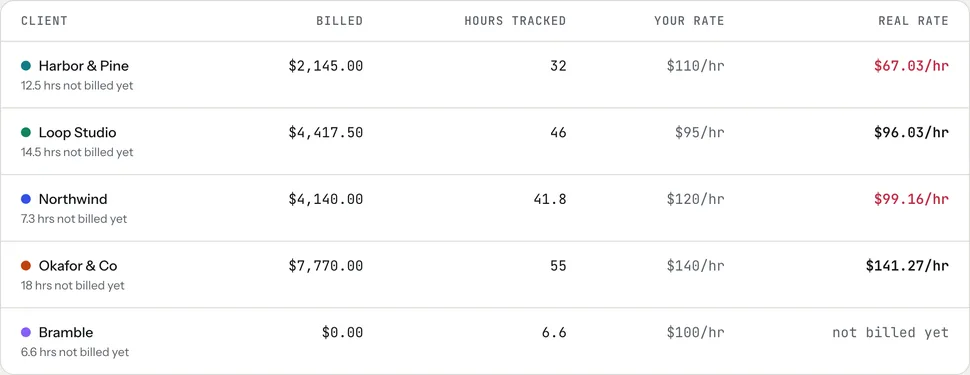
If one client keeps landing in red, that's your cue for a friendly no to the next free extra. You can also compare against your real rate, or recheck your price with the hourly rate calculator.
Start the clock, no accountSign up free
This note's picture is a closed umbrella: no isn't a wall, it's something you open when you need it. Say it kindly and clearly, offer what you can, and most good clients will still be there next month.
Keep reading
 Freelance contract basicsThe six things to settle in writing before you start, and where the law requires it.
 Weekly client updatesWhat to send every Friday so the invoice is just the total of things the client already saw.
 Client red flagsWarning signs in a new client, the money ones to take seriously, and a polite test.
Questions
How do you politely say no to a client?
Thank them, give one honest reason, and offer an alternative: a later date, a smaller scope, a different price, or a referral to someone who's a better fit. Reply within a day or two rather than going quiet.
Will saying no make me lose the client?
Usually not, if you offer something in its place. A clear "not now, but here's what I can do" shows you protect the work you've promised, and most good clients respect that.
How do I say no to a discount request?
Keep your rate and change the scope instead: offer a smaller version of the job at a lower total, or different payment terms. That way the price still matches the work.
What should I say when a client messages after hours?
You don't need to reply until your working hours start. Answering during your hours every time sets the pattern, and you can share your hours once in writing so clients know when to expect a reply.
See what a yes would cost.
Track your week per client and see the real rate on every job, so saying no gets easier. Free to start, no account to try it.
Start free Try it, no sign-upFree to startNo cardNo screenshots, ever