Notes · clients
Red flags in a new client, and what to do about them
The signs worth noticing before you start, the money ones to take seriously, and a polite test that sorts good clients from risky ones.
Updated 2026-10-27
A red flag on a snowy ridge is easy to see from far away. That's the point of it: it warns you before you're in trouble, not after. Client red flags are harder to spot, because when you're new to freelancing and need the work, it's tempting to explain them away.
A red flag doesn't always mean "walk away". Most of the time it means "slow down and set clearer terms". This note lists the signs worth noticing in a new client, what each one usually means, and a simple test that sorts good clients from risky ones without accusing anyone.
Red flags in the first conversation
- "It should be quick." When the client decides how long your work takes before you've seen it, the scope is likely to grow and the budget isn't. Ask for the details and quote from them.
- No budget, and no wish to share one. Some clients genuinely don't know. But if they won't give even a range after you ask, you may be writing a proposal only to be told it's too much.
- Free work as a "test". A short paid trial is normal. Unpaid sample work that looks a lot like the real project isn't. Offer a small paid first step instead.
- Every past freelancer was terrible. Sometimes true. But if the story is the same each time, ask yourself what the next freelancer will say about this client.
- Everything is urgent. A real deadline is fine. A client who needs everything today, but takes a week to reply, will make your schedule depend on theirs.
- Lots of free calls before any agreement. One call to understand a project is normal. A third unpaid "quick chat" before anything is signed is unpaid consulting.
Red flags around money
These are the ones to take most seriously, because they're about whether you'll be paid at all.
- No written agreement. "We don't need a contract, we trust each other" sounds friendly. A short written agreement protects both sides, and in some places it's required for freelance work above a certain size (freelance contract basics covers where).
- Won't pay a deposit on a big fixed-price job. Some large companies genuinely can't pay up front because of how their accounts payable works. A new small client who refuses any deposit on a large project is asking you to carry all the risk.
- Paying you too much. A client sends a check for more than the invoice and asks you to send back the difference. This is a known scam. The FTC explains that the check is fake, and warns that "even if you see the funds in your account, that doesn't mean it's a good check" because fake checks can take weeks to be discovered (FTC, fake check scams). Don't send money back from a check.
- Unusual ways to move money. Being asked to use money from a client's check to buy gift cards, send cryptocurrency or wire money to someone is another warning sign the same FTC page describes.
- Moving off a marketplace right away. If you met on a freelance platform and the client wants to switch to direct payment before any work, read that platform's own rules first, and be extra careful with someone you can't yet verify.
Checked October 26, 2026. If you think you've been targeted by a scam, you can report it at ReportFraud.ftc.gov.
The simple test: a short agreement and a first invoice
You don't need to interrogate a new client. Send two things, and watch what happens.
- A one-page agreement. What you'll do, the price, the payment terms, how changes are handled. A good client reads it, asks a question or two, and says yes.
- A first invoice before the work starts. A deposit on a fixed-price job, or the first part of a project split into stages. A good client pays it on time.
If a client pushes back on both, delays both, or wants to "just get started" without either, that's the clearest red flag of all. Retainers and deposits has more on asking for money up front.
Red flags once the work starts
Some flags only show up later. Watch for:
- The first invoice is late. The first payment tells you a lot. If it's late, follow up promptly and politely (here's a schedule), and think twice before starting the next stage.
- Approvals that never come. If the client won't confirm anything, they can dispute everything later. Get small, regular sign-offs.
- "While you're in there..." One small extra is normal. A steady stream is scope creep, and it needs a price.
Green flags, so you know what good looks like
It helps to know the opposite too. Good clients usually share a budget range, answer questions in writing, are happy to sign a simple agreement, pay the first invoice on time, and tell you early when something changes. If a client shows most of these, a small yellow flag is rarely worth losing sleep over.
How tab helps you see the pattern
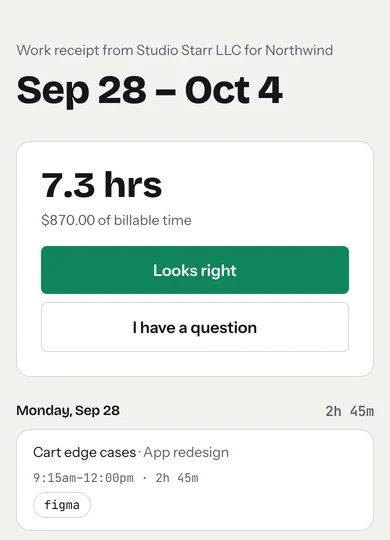
Red flags are easier to act on when you have a record. In tab, each week you can send the client a work receipt: what you worked on, with links to the real work. They tap "Looks right" or "I have a question". A client who approves regularly is a good sign. One who never does is telling you something.
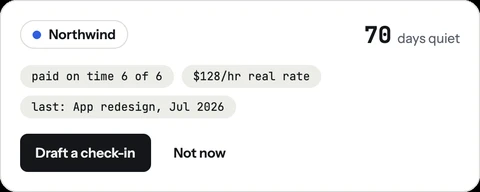
Each client also gets its own payment terms (from "On receipt" up to 60 days), and on fixed-price work you can bill in parts, so the first part is invoiced before the main work. For clients who've paid you before, tab's Grow screen lists the ones gone quiet with how reliably they paid, which is the best green flag there is:
Need a first invoice for a deposit right now? The free invoice generator makes one in a minute, and your profession's rate guide helps you check the quote first.
Keep reading
 Freelance contract basicsThe six things to settle in writing before you start, and where the law requires it.
 Weekly client updatesWhat to send every Friday so the invoice is just the total of things the client already saw.
 Saying no to clientsFour kinds of no (later, smaller, at my rate, not me) and the words for each.
Questions
What are the biggest red flags in a new freelance client?
Refusing any written agreement, refusing a deposit on a large fixed-price job, asking for unpaid sample work, and overpaying with a check and asking for the difference back. The last one is a known scam the FTC warns about.
Should I turn down a client with a red flag?
Not always. Many red flags mean "set clearer terms": a short written agreement, a deposit, and regular sign-offs. If the client won't accept those, that's the time to walk away.
Is it a scam if a client overpays and asks for money back?
It's a common fake check scam. The FTC says funds can show in your account before the bank finds out the check is fake, which can take weeks. Don't send money back from a check.
How can I test a new client without being rude?
Send a one-page agreement and a first invoice before work starts. Good clients read, ask a question or two, sign and pay on time. How a client responds to both tells you a lot.
Start every client on clear terms.
Payment terms per client, a deposit before the work, and weekly receipts the client approves. Free to start, no account to try it.
Start free Try it, no sign-upFree to startNo cardNo screenshots, ever