Notes · clients
Gold stars: how to ask clients for a testimonial
When to ask, how to make it easy, the words to use, and the rules that keep testimonials honest.
Updated 2026-10-27
Remember the sheet of gold star stickers on a teacher's desk? Nobody got a star by asking for one at the end of the year. They got it right after doing something well. Testimonials work the same way. The best time to ask is the moment a client is pleased, not months later when the project has faded.
For a new freelancer, a few honest sentences from real clients do more than any amount of describing your own work. Here's when to ask, how to make it easy for a client to say yes, the words to use, and the rules to follow so your testimonials stay honest.
When to ask
Ask when the good feeling is fresh. A few natural moments:
- Right after delivery, when the client says the work is great.
- When they thank you in an email or a message, unprompted. That message may already be your testimonial.
- When they approve a week of work without questions, or pay an invoice early.
- When they come back for a second project. Repeat clients are your strongest proof.
Avoid asking in the middle of a problem, right after a dispute, or attached to an overdue invoice. Keep the request separate from money.
Make it easy to say yes
"Could you write me a testimonial?" is hard to answer. Most people don't know what to write and put it off. Three things help:
- Ask a question or two, not for an essay. "What was the problem before we started, and what's different now?" gets a far better answer than "Any feedback?"
- Keep it short. Say that two or three sentences is plenty.
- Offer to use their own words. If they already sent you a kind message, ask if you can quote it. They only have to say yes.
What to say
One follow-up is enough. If they don't reply, let it go and keep the relationship warm. Writing to past clients has wording for staying in touch.
Get permission, and get the details right
Before you publish anything, confirm in writing:
- How to credit it: full name, first name only, job title, company name, or anonymous.
- Where you'll use it: your website, a proposal, social posts.
- The final wording. Fixing a typo is fine. Changing what they meant isn't. If you shorten a quote, send them the short version to approve.
Some clients can't be named because of their employer's rules. "Marketing lead at a regional health company" is still useful, as long as it's true.
The rules: keep it honest
In the US, the Federal Trade Commission publishes guidance on endorsements and testimonials. A few points from its own pages, in plain words. This is general information, not legal advice.
- Testimonials must be real and honest. The FTC says "an endorsement must reflect the honest opinion of the endorser" (FTC, Endorsement Guides: what people are asking).
- Disclose anything you gave in return. If you offered a discount or a gift for a testimonial, the same guidance says to disclose that connection when it would change how readers judge it. Simpler: don't pay for testimonials.
- No fake or made-up testimonials. An FTC rule announced in August 2024 bans fake reviews and testimonials, including ones that "misrepresent that they are by someone who does not exist," and bans incentives conditioned on a review expressing a particular sentiment (FTC, final rule on fake reviews and testimonials).
- Public reviews are a little different. If you ask clients to leave reviews on a public site, the FTC warns that only asking customers you think will be happy "would be misleading if it substantially skews the favorability of the reviews" (the Endorsement Guides page above). Ask every finished client, not just the happiest.
Checked October 26, 2026. General information, not legal advice. Rules outside the US differ.
Where to use testimonials
- Next to the work it describes. A quote under the project it's about is stronger than a page of quotes.
- In proposals, one short quote from a client in a similar business.
- On your profiles and portfolio. If you're still building one, getting your name out covers where a portfolio fits.
Keep every testimonial, with the date and the permission email, in one folder. You'll want them again.
Spotting the moment in tab
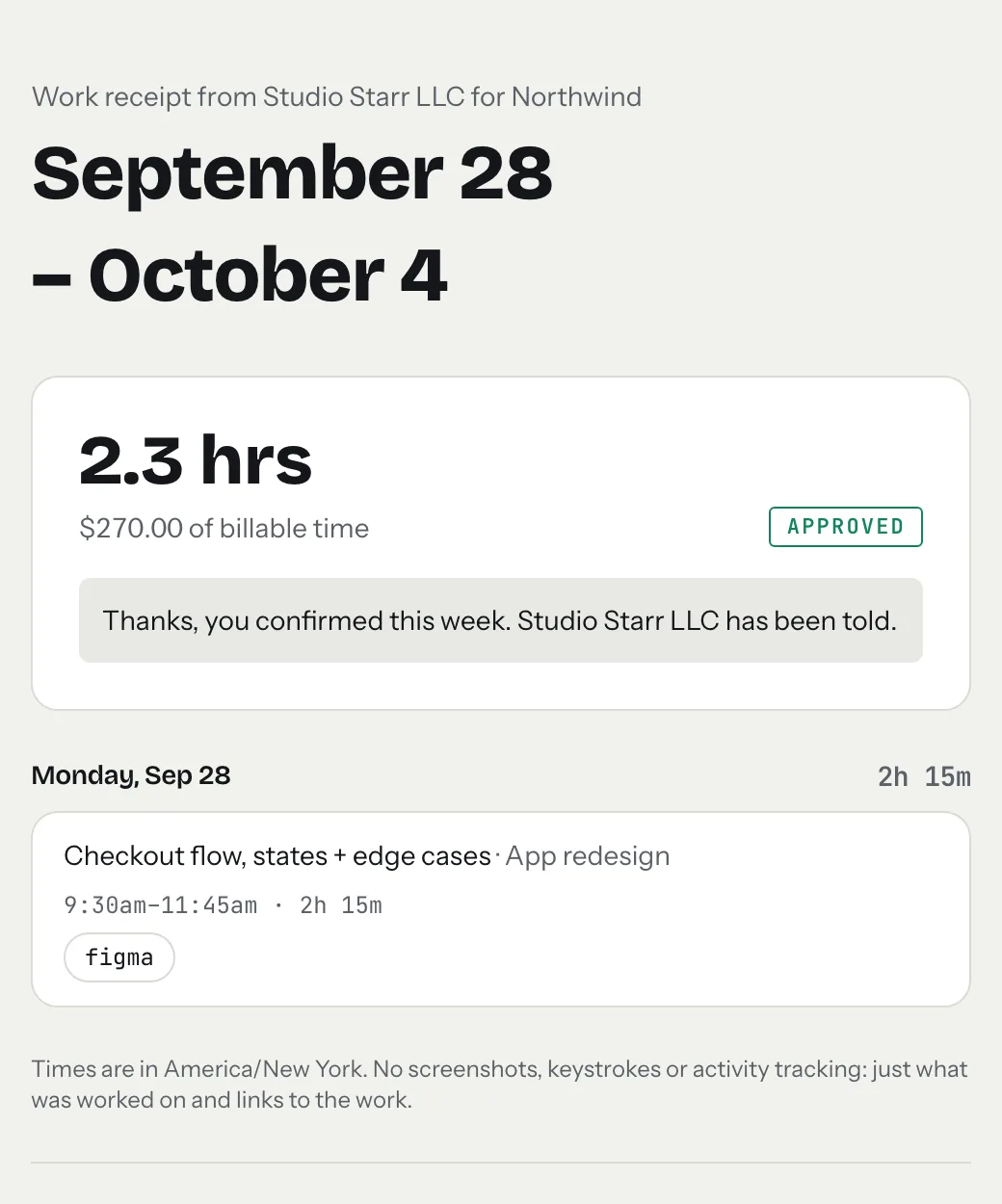
tab doesn't collect testimonials, but it shows you the moments worth asking in. Each week you can send a client a work receipt with what you worked on and links to the real work. When they confirm it, tab marks the week approved and tells you. A client who approves week after week is having a good experience, and might be glad to say so.
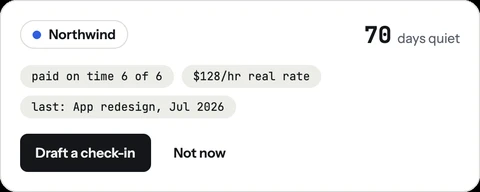
For past clients, the Grow screen lists the ones who paid you and have gone quiet, with how reliably they paid and what you last worked on. A check-in to a client like this is also a natural time to ask whether they'd share a line about the project. The past clients page shows how it works.
Good testimonials usually come from clients who never had to wonder what they were paying for. Sending weekly client updates, or sharing a live tab they can check any time, helps build that kind of trust long before you ask.
Keep reading
 Freelance contract basicsThe six things to settle in writing before you start, and where the law requires it.
 Weekly client updatesWhat to send every Friday so the invoice is just the total of things the client already saw.
 Saying no to clientsFour kinds of no (later, smaller, at my rate, not me) and the words for each.
Questions
When is the best time to ask a client for a testimonial?
Right after a good moment: when you deliver and they're pleased, when they thank you unprompted, or when they come back for another project. Keep the request separate from any invoice.
How do I ask for a testimonial without being awkward?
Ask for two or three sentences, give one or two simple questions to answer, and offer to quote words they've already sent you. Follow up once, then let it go.
Can I edit a client's testimonial?
Fixing a typo is fine, but don't change what they meant. If you shorten or tidy a quote, send the final version to the client and get their approval before you publish it.
Can I offer a discount in exchange for a testimonial?
The FTC says you should disclose that kind of connection, and its 2024 rule bans incentives conditioned on a review expressing a particular sentiment. The simplest approach is not to pay for testimonials at all.
Give clients something to praise.
Weekly receipts with links to the real work, approved in one tap, and a live tab they can check any time. Free to start, no account to try it.
Start free Try it, no sign-upFree to startNo cardNo screenshots, ever